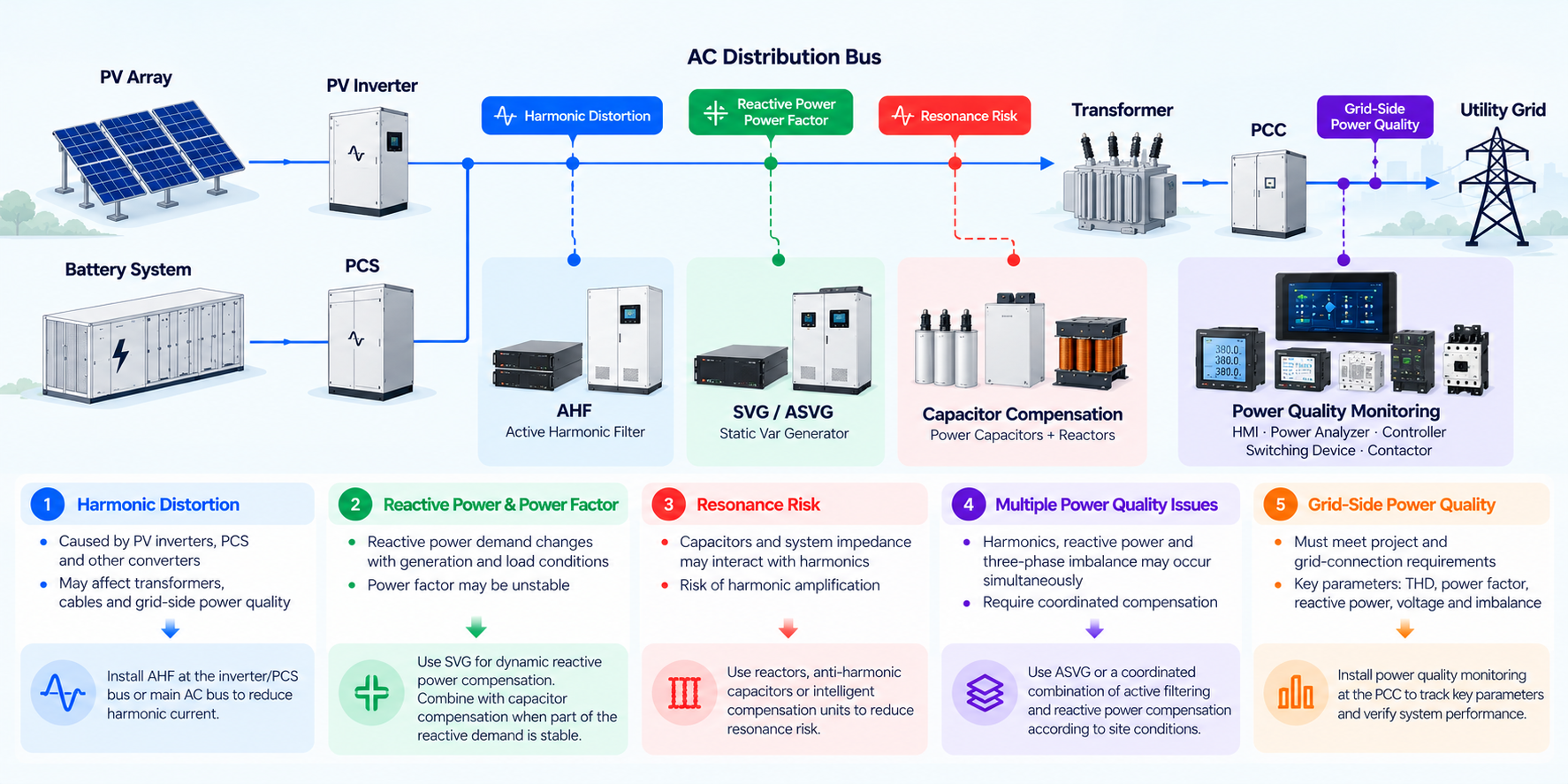
Solar PV, energy storage and other power conversion systems rely heavily on inverters, PCS and switching power electronics.
As converter-based equipment becomes more widely connected to the grid, maintaining stable voltage, low harmonic distortion and proper reactive power control at the AC bus and PCC becomes increasingly important for reliable system operation and grid connection.
Power Quality Problems
Harmonic DistortionPV inverters, PCS and other converters may introduce harmonic currents into the AC system, affecting transformers, cables and grid-side power quality.
Reactive Power & Power FactorChanges in generation, charging, discharging and load conditions can cause reactive power demand and power factor to vary continuously.
Voltage FluctuationRapid changes in solar generation or converter operating conditions may cause voltage variation at the AC bus or PCC.
Three-Phase ImbalanceUneven loads or distributed single-phase equipment can create current and voltage imbalance between phases.
Harmonic ResonanceConverters, capacitors, transformers and grid impedance may interact and amplify certain harmonic frequencies under specific system conditions.
Power Quality Challenges
Variable Operating ConditionsSolar generation and energy conversion systems operate over a wide power range, so electrical conditions can change significantly throughout the day.
High Penetration of Power ElectronicsMultiple inverters and PCS units connected to the same bus create a more complex harmonic environment and increase interaction between equipment.
Dynamic Reactive Power DemandReactive power requirements may change rapidly, making fixed or slow stepped compensation insufficient in some applications.
Grid-Side Power Quality RequirementsHarmonics, voltage, power factor and reactive power at the PCC must remain within project and grid-connection requirements.
System InteractionCompensation equipment must be coordinated with inverter controls, transformers, existing capacitor banks and grid impedance to avoid resonance or overcompensation.
Power Quality Solution
Harmonics from Inverters & PCSMeasure harmonic current and voltage distortion at the converter output, AC bus and PCC to identify the main harmonic source.Where harmonic current is significant, AHF can be installed near the inverter/PCS bus or main AC distribution bus to reduce harmonic current before it propagates upstream.
Unstable Power Factor & Dynamic Reactive PowerWhere reactive power changes rapidly with generation or converter operation, dynamic compensation can be applied at the main AC bus or PCC.SVG can provide fast inductive or capacitive reactive power compensation. Where part of the reactive demand remains relatively stable, capacitor-based compensation can be combined with dynamic compensation for a more economical solution.
Capacitor Compensation in Harmonic EnvironmentsBefore applying conventional capacitor compensation, harmonic levels and resonance risk should be evaluated.Where harmonics are present, reactors, anti-harmonic capacitor compensation or intelligent compensation units can be used to provide reactive power while reducing the risk of harmonic amplification.
Multiple Power Quality ProblemsIf reactive power, harmonics and three-phase imbalance occur simultaneously, the compensation strategy should be based on the proportion and variation of each problem.Depending on site conditions, ASVG or a coordinated combination of active filtering and reactive power compensation can be used rather than relying on a single device.
Monitoring & Coordinated ControlPower quality monitoring at the main AC bus or PCC should track key parameters such as THD, power factor, reactive power, voltage and phase imbalance.The measured data can then be used to adjust the compensation strategy and verify system performance.
Recommended System Architecture
Main Power Path PV Array → PV Inverter → AC Distribution Bus → Transformer → PCC → Utility Grid
For energy storage applications: Battery System ↔ PCS ↔ AC Distribution Bus
Recommended Treatment Points
Inverter / PCS SideMain concern: Harmonic CurrentRecommended approach: Harmonic measurement and active filtering close to the disturbance source when required.
Main AC Distribution BusMain concern: Reactive Power · Power Factor · HarmonicsRecommended approach: Dynamic reactive power compensation, harmonic mitigation or hybrid compensation according to actual load conditions.
Capacitor Compensation BranchMain concern: Base Reactive Power Demand · Resonance RiskRecommended approach: Capacitors with appropriate switching, control and reactor configuration where required.
PCCMain concern: Grid-Side Power QualityRecommended monitoring: THD · Power Factor · Reactive Power · Voltage · Phase Imbalance
Final equipment type, compensation capacity and installation point should be determined according to actual power quality measurements and system conditions.
Case Studies
Proven in Real Projects
Selected field projects where this solution has been applied. Click any card to see the full case with measured results.
• Product or model
• Application or problem to solve
• Required specifications, such as voltage, frequency or capacity
• Quantity and delivery requirements
You can also attach drawings, product photos or test reports, if available.